Most people don’t have a motivation problem. They have a distraction problem.
Every day, your attention gets pulled in dozens of directions. Emails arrive unexpectedly. Notifications appear on your phone. Colleagues ask questions. Social media is always one click away.
This is why many professionals, students, and remote workers start using focus music to create an environment that helps them concentrate. While music won’t magically make you productive, the right listening setup can help reduce distractions and make it easier to stay engaged with important work. That’s what makes focus music different. Instead of entertaining you, it’s designed to stay out of your way.
In this guide, you’ll learn what focus music is, how to use it properly, common mistakes to avoid, and practical ways to build a more productive work routine.
What Is Focus Music?
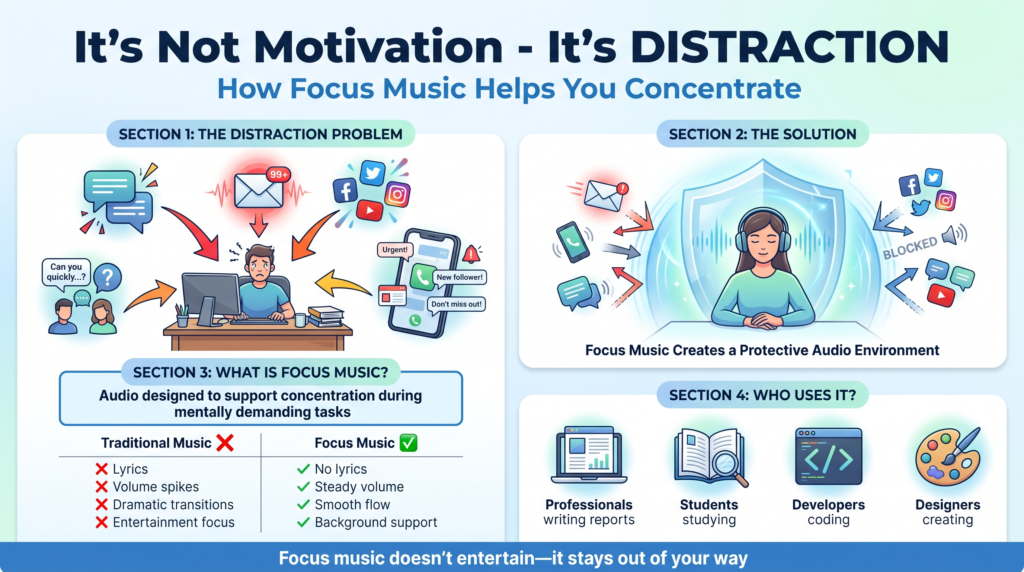
Focus music refers to audio designed to support concentration during work, study, reading, or other mentally demanding tasks.
Unlike traditional playlists, focus music often avoids distracting elements such as lyrics, sudden volume changes, and dramatic transitions between songs.
Focus music isn’t meant for entertainment. It is to create a stable audio environment that keeps you engaged with the task at hand.
Many people use focus music while writing reports, studying for exams, coding, designing, or completing deep work sessions.
Why Distractions Hurt Productivity
Most productivity problems are not caused by a lack of effort.
They are caused by interruptions.
Research has consistently shown that switching between tasks can make work feel more difficult and mentally exhausting. Every interruption forces your brain to refocus.
Even small distractions add up throughout the day.
A quick look at your phone may seem harmless, but if you do it 20 times, you’ve lost a significant amount of productive time.
This is one reason why focus music has become popular among people who need sustained concentration.
Instead of constantly reacting to external sounds, they create a more predictable environment.
How Focus Music Creates a Better Work Environment
The benefit of focus music isn’t necessarily the music itself.
Often, it’s what the music helps block out.
In a typical environment, you might hear:
- Conversations
- Traffic noise
- Office equipment
- Coffee shop chatter
- Notifications
- Television sounds
These noises constantly compete for your attention.
By introducing consistent background audio, many people find it easier to remain focused on their primary task.
Consistency Matters
One of the biggest advantages of focus music is consistency.
Unexpected sounds naturally attract attention.
A predictable audio environment is often less distracting than complete silence, which is interrupted by random noises that pull your attention away.
This is especially useful for remote workers, students, and people working in shared spaces.
Different Types of Focus Music
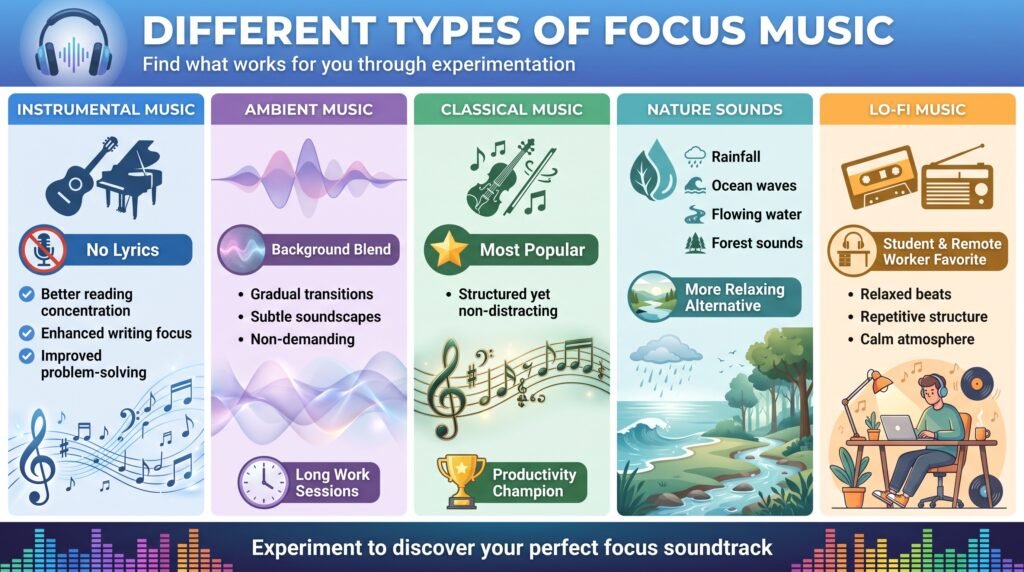
Not everyone responds to the same type of audio. Also, not everyone likes the same music. Finding the right focus music that works for you often requires experimenting a few times.
Instrumental Music
Instrumental music removes lyrics from the equation.
Without words competing for your attention, many people find it easier to concentrate on reading, writing, and problem-solving.
Ambient Music
Ambient music is designed to remain in the background.
It typically features gradual transitions and subtle soundscapes that don’t demand attention.
Many people use ambient focus music during long work sessions.
Classical Music
Classical music remains one of the most popular choices for productivity.
Many compositions contain enough structure to be enjoyable without becoming overly distracting.
Nature Sounds
Rainfall, ocean waves, flowing water, and forest sounds are common alternatives to traditional music.
Some people find nature-based focus music more relaxing than instrumental tracks.
Lo-Fi Music
Lo-fi has become a favorite among students and remote workers.
The relaxed beats and repetitive structure create a calm listening experience that many people associate with concentration.
Creating the Perfect Focus Setup
The music itself is only part of the equation.
Your environment also matters.
Keep Your Workspace Clean
A cluttered desk often creates unnecessary mental clutter.
Removing distractions from your workspace can help create a more productive atmosphere. A clean desk also helps you start a task faster because you do not have to clean up before you have space to work.
Silence Notifications And Put Your Phone Upside Down
Many people underestimate how disruptive notifications can be. Every time your notification sound goes off or your screen lights up, your attention fades a little.
Before starting a work session, consider muting:
- Email alerts
- Social media notifications
- Text messages
- News updates
Even a quick glance at your phone can break concentration.
Use Quality Headphones
Headphones can help create a more focused and less distracting environment.
This is particularly useful in:
- Open offices
- Libraries
- Shared apartments
- Coffee shops
If you’re looking for the best options, check out our guide to Sony headphones comparison, where we compare several models and brands designed for studying and productivity.
Step-by-Step Guide to Using Focus Music
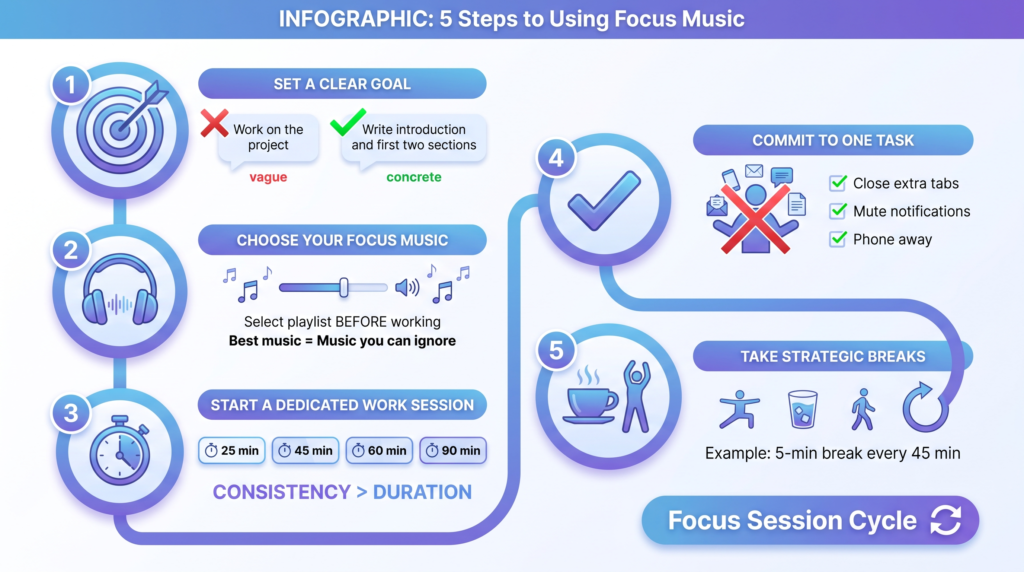
Step 1: Set a Clear Goal
Start by deciding exactly what you want to accomplish during the session. Make it concrete and not vague.
For example, “Work on the project” is not a goal. But “Write the introduction and first two sections.” is.
Clear, concrete tasks make it much easier to stay on track once the focus music starts. You know exactly what you’re supposed to be doing, so there’s less mental wandering.
Step 2: Choose Your Focus Music
Select a playlist before you begin working.
Avoid spending ten minutes searching for the perfect track.
The best music for focus is often the music you can ignore while remaining productive.
Besides choosing the right playlist, choose the right volume.
Step 3: Start a Dedicated Work Session
Choose a fixed work period to work through the session without losing focus.
Populations include:
- 25 minutes
- 45 minutes
- 60 minutes
- 90 minutes
Consistency is more important than duration. The goal is to pick a timeframe you can realistically commit to without breaking away to check your phone halfway through.
Step 4: Commit to One Task
Multitasking sounds productive, but it isn’t. In reality, switching between tasks often creates mental fatigue. Choose one priority and focus entirely on that activity.
Before the session starts, also do a quick sweep. Close browser tabs not related to the task. Mute notifications, or switch on Do Not Disturb. Put your phone face down — or better, in another room.
Step 5: Take Strategic Breaks
Concentration naturally decreases over time, but short breaks help restore mental energy. After a work session, stand up, stretch, drink water, or take a short walk. Then return to your next session with renewed focus.
Personally, I take a 5-minute break every 45 minutes. This helps me keep my thinking clear and get less bored while working.
How to Build a Productivity Routine
Many people fail because they rely on motivation alone.
Systems are more reliable.
Create a Daily Ritual
A simple ritual can signal to your brain that it’s time to work.
This might include the same things on the same moment. For example, cleaning your desk before you start working. Put on headphones and start your favorite focus music.
Repeating the same process daily helps your brain recognize when it is time to focus.
Front-Load Your Day With Deep Work
Most people have their highest cognitive energy in the first two to three hours of the day. If you can protect that window — with focus music, headphones, and minimal interruptions — you’ll often get more done in those two hours than the rest of the day combined.
Review Your Progress
Choose one day of the week to spend five minutes asking yourself: which sessions felt most productive this week? What kept interrupting me? What can I change next week? Which music worked best?
Small adjustments, made consistently, add up. A system you actually reflect on gets better over time. Once you set it and forget it, it stops working.
Expert Tips for Better Results
Keep the Volume Moderate
Try to keep your volume on a moderate level. Louder isn’t always more productive. High volume tends to become mentally draining and distracting over time and can actually lower your focus. Most people find a moderate level more sustainable, and it works best for long sessions.
Use Familiar Playlists
New music naturally attracts attention. Familiar focus music tends to blend into the background more effectively.
If you start every morning with the same sequence — pick your focus music, set a session length, start working — your brain begins to treat that as a trigger for concentration. It doesn’t happen overnight, but after a few weeks, it starts to feel almost automatic.
Use Focus Music With Time Blocking
Combine time blocking with structured audio sessions. Block one hour a day for deep work, put on focus music, and don’t let yourself be distracted before the block is done. The audio reinforces the boundary, which helps more than you might expect.
Also, different tasks can require different types of concentration.
For example:
- Writing may benefit from ambient music
- Reading may work better with classical music
- Creative tasks may pair well with lo-fi playlists
Common Mistakes to Avoid
Constantly Switching Music
Many people spend more time choosing music than working.
Pick a playlist and stick with it.
Perfection isn’t necessary.
Expecting Instant Results
Focus music is a tool.
It’s not a magic productivity hack.
Results usually come from combining music with good habits and a structured workflow.
Ignoring Sleep
No playlist can compensate for poor sleep.
If you’re exhausted, concentration will suffer regardless of what you’re listening to.
Working Without Breaks
Long hours without rest often reduce productivity.
Short breaks can help maintain energy throughout the day.
Does Focus Music Work for Everyone?
Not necessarily.
Some people prefer silence.
Others find focus music extremely helpful.
The only way to know is through experimentation.
Try different environments, different playlists, and different work sessions.
Over time, you’ll discover what supports your concentration most effectively.
Conclusion
Sustained focus isn’t something you either have or don’t. It’s something you build conditions for.
Focus music is one of those conditions. Used well — with clear goals, decent headphones, minimized distractions, and realistic expectations — it can genuinely help you get into a working rhythm and stay there longer.
The platform or playlist you use matters less than the habit you build around it. Pick something that works for you and stick with it. Give yourself enough time to actually make progress in building more focus.
And if you want to make the most of your listening sessions, pairing good audio with the right headphones makes a bigger difference than most people expect:
Complete Guide to Sony Headphones for Focus and Deep Work — full guide.
Frequently Asked Questions
What is focus music?
Focus music is audio designed to support concentration during work, study, reading, or other mentally demanding tasks.
Is focus music better than silence?
It depends on the individual. Some people work best in silence, while others find that focused music helps reduce distractions.
What type of focus music is best?
Instrumental, ambient, classical, nature sounds, and lo-fi music are all popular options.
Should I use headphones?
Headphones can improve focus because they help reduce external distractions, especially in noisy environments like offices or on trains.
How long should I listen to focus music?
Most people use sessions ranging from 25 to 90 minutes, depending on the complexity of the task and their personal preferences.
Some of the links on Best Focus Music are affiliate links. This means that if you click a link and buy something, we may earn a small commission — at no extra cost to you. We only recommend products we genuinely think are worth your time.
We are a participant in the Amazon Associates Program, an affiliate advertising program designed to provide a means for sites to earn advertising fees by linking to Amazon.com and affiliated sites. We may also work with other affiliate networks and individual brands from time to time.