
Staying focused or relaxing is tough. Notifications, open tabs, and noise undermine concentration. Many turn to music to combat this.
Focus music keeps you alert and productive, while sleep music helps your brain relax and prepare for rest. The two serve different purposes: focus music helps maintain concentration, while sleep music promotes relaxation.
In this guide, we compare focus vs sleep. We’ll first explore the difference between focus and sleep music. Then, we’ll examine how each one affects your brain and discuss the best times to use them.
What is Focus Music?
Focus music is designed to help you concentrate and stay mentally engaged during work. It supports tasks like coding, writing, studying, or problem-solving by reducing distractions and keeping your brain in a stable state.
Instead of grabbing your attention, it stays in the background. Most focus audio avoids lyrics, sudden changes, or emotional intensity because these elements pull attention away from your task.
The goal is simple: help your brain stay alert without being overwhelmed.
What is Sleep Music?
Now that we’ve outlined focus music, let’s shift to sleep music and see how it’s designed to relax your mind before bed.
Sleep music is made to help your mind slow down and relax before bed. Instead of keeping you alert like focus music, it helps your brain switch into rest mode.
Most sleep audio uses soft ambient sounds, slow rhythms, or nature sounds like rain and ocean waves. Some tracks even become calmer over time to help you fall asleep more naturally.
Focus music boosts performance; sleep music fuels recovery and deep relaxation.
How the Brain Responds to Sound
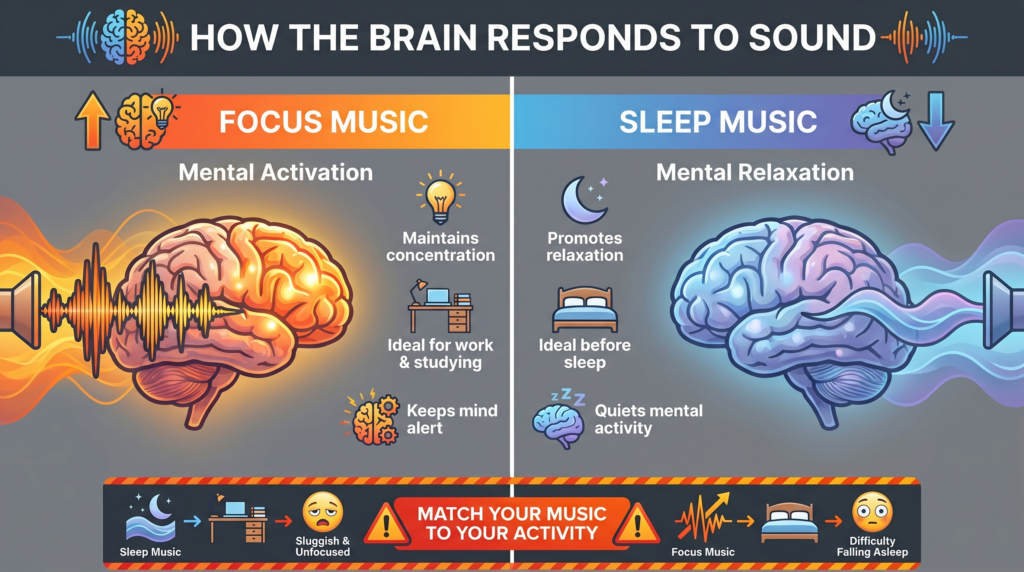
Your brain is constantly reacting to sound, even when you’re not actively paying attention. Different types of audio trigger different neurological responses.
Focus music is meant to help you stay mentally active and concentrated while working or studying. It keeps your brain engaged enough to stay focused on what you’re doing.
Sleep music works the other way around. The sounds are calmer and slower, helping your mind relax and making it easier to wind down before sleep.
This is why using sleep music during work can make you feel slow or unfocused, while using focus music before bed can make it harder to fall asleep.
Focus vs Sleep: Key Differences
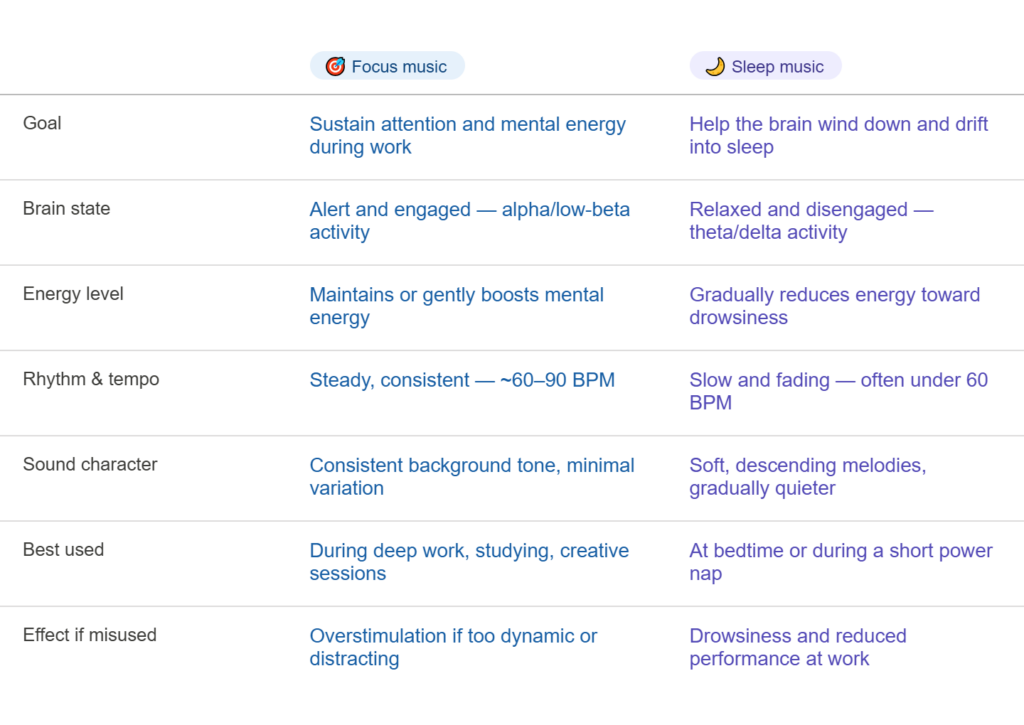
The main difference between focus and sleep audio comes down to intent and brain state.
Focus music is designed to help you stay focused for longer periods. It usually uses steady rhythms and consistent sounds that stay in the background while you work.
Sleep music does the opposite. The sounds are slower, softer, and more calming, so your brain can relax and gradually wind down before sleep.
Energy level is another key difference. Focus music maintains mental energy, while sleep music reduces energy for relaxation.
Using the right one at the right time matters more than most people realize.
Best Times to Use Focus Music
Focus music works best when you need to stay concentrated for a longer time without getting distracted.
For developers, it can help during long coding sessions where losing focus slows everything down. Students and researchers often use it while reading, studying, or writing because it helps them stay concentrated.
Writers and content creators often use focus audio to get into a flow state faster, especially when starting a new project feels difficult.
People with ADHD also report that structured focus audio can help reduce mental noise and make it easier to stay on task.
When to Use Sleep Music
You can use sleep music for recovery and rest, not performance.
It can help you wind down after a busy day, especially if your mind is still active from work or screen time. Many people use it to fall asleep faster or improve sleep quality.
It’s also useful during short rest periods, such as naps or breaks between deep work sessions.
The key is consistency. Using sleep audio as part of a nighttime routine can train your brain to recognize when it’s time to shut down.
What Happens When You Mix Them Up?
Using focus music when you should be sleeping can keep your brain too active, making it harder to relax. On the other hand, using sleep music while working can lower your alertness and make it harder to concentrate.
This mismatch is more common than people think, especially when playlists are labeled vaguely as “relaxing” or “deep focus.”
Understanding the difference between when your brain tries to sleep and when it tries to focus helps you avoid mental friction and choose the right audio for the right moment.
Tools That Help You Switch Between Focus and Sleep
Modern audio tools make it easier to switch between mental states without overthinking it.
Instead of searching for playlists, these platforms are designed specifically for either focus or sleep.
Brain.fm
Brain.fm is a great tool for focused audio. It uses engineered sound patterns designed to support concentration and reduce distractions.
It’s widely used by developers, students, and remote workers who need consistent deep work sessions without mental fatigue. See our brain.fm review to see if it is something for you!
Endel
Endel takes a different approach, generating adaptive soundscapes based on your environment and the time of day. It can automatically shift between focus, relaxation, and sleep modes.
This makes it especially useful for people who want one system for both work and recovery.
Calm and Sleep-Focused Apps
Apps like Calm focus more on sleep and relaxation. They offer guided sleep stories, ambient soundscapes, and breathing exercises that help reduce stress before bed.
These tools are ideal if your main challenge is winding down at night rather than staying focused during the day.
Why Focus and Sleep Sound So Different
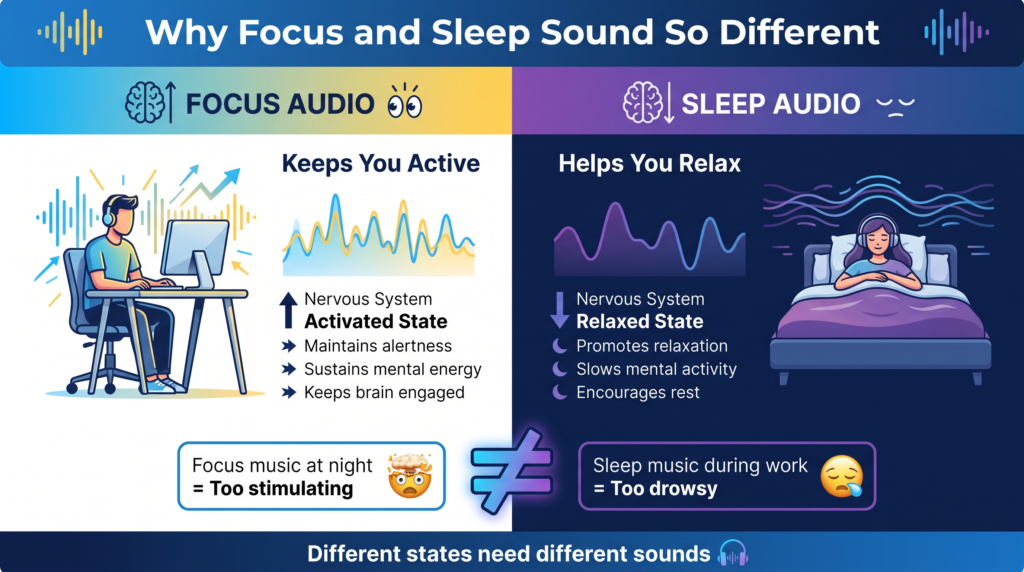
Even though both use audio, they target completely different states of the nervous system.
Focus audio helps keep your brain active enough to stay focused, while sleep audio helps you relax and slow down mentally.
That’s why the same playlist doesn’t always work for both working and sleeping. Music that helps you focus can feel too stimulating at night, while sleep music can make you feel tired during work.
Common Mistakes To Watch Out For
A common mistake is using sleep music while working. It may sound relaxing at first, but it can also make you feel slower, less alert, and more distracted over time.
Another mistake is using focus music at night. Some focus tracks are designed to increase alertness, which can delay sleep.
People also often rely on the same playlist for everything. This creates inconsistent results because your brain responds differently depending on the type of sound and the task.
A lot of people also switch between playlists or apps too often. Constantly changing your audio makes it harder for your brain to settle into either focus or relaxation.
How to Choose What You Need
The easiest way to figure it out is simple: do you need to focus, or do you need to relax and recover?
If you need to perform—write, code, study, or create—focus music is the right choice. If you need to recover, relax, or sleep, then sleep music is better.
Most productivity problems come from using the wrong type of audio at the wrong time, not from the audio itself.
Final Thoughts
The debate around focus vs sleep isn’t about which one is better—it’s about using each one correctly.
Focus music helps you stay sharp, structured, and productive during work. Sleep music helps you recover, reset, and recharge afterward.
When used properly, both can become powerful tools in your daily routine.
Treat audio as a strategic tool in your routine. Match sound to your mental state to easily boost focus or rest when needed. Clear purpose leads to better results—make this part of your workflow.
Some of the links on Best Focus Music are affiliate links. This means that if you click a link and buy something, we may earn a small commission — at no extra cost to you. We only recommend products we genuinely think are worth your time.
We are a participant in the Amazon Associates Program, an affiliate advertising program designed to provide a means for sites to earn advertising fees by linking to Amazon.com and affiliated sites. We may also work with other affiliate networks and individual brands from time to time.