
Quick Answer
So do High IQ People Like Classical Music? Not necessarily, but there’s a reason the stereotype exists.
People who score high on measures of openness to experience and abstract thinking tend to gravitate toward more complex music, and classical music sometimes fits that description. But intelligence alone doesn’t predict what someone enjoys listening to. Plenty of highly intelligent people find classical music boring, distracting, or simply not their thing.
What classical music does reliably offer is a low-distraction listening environment — no lyrics competing for your language-processing attention, relatively stable dynamics, and long-form structures that don’t demand constant attention to follow. That’s why it keeps showing up in study playlists, deep work sessions, and library headphone queues, regardless of IQ.
Understanding the Question
The idea that smart people listen to classical music has been around long enough to feel like common knowledge. It shows up in movies, in old magazine features on “genius habits,” and in the endless productivity content that suggests Beethoven is the key to a focused morning.
Part of this comes from genuine cultural associations — classical music has historically been tied to universities, concert halls, and elite education. Part of it comes from a handful of studies that got simplified into headlines. And part of it is probably just confirmation bias: when a famous scientist mentions they enjoy Mozart, it gets remembered; when they mention they love heavy metal, it gets forgotten.
The more honest version of the question isn’t really do high IQ people like classical music? — it’s: why does classical music keep appearing in contexts associated with serious intellectual work? That’s a more interesting question, and the answer has less to do with intelligence and more to do with how the brain handles competing inputs during cognitively demanding tasks.
Detailed Explanation
What Research Actually Shows
There’s a body of personality psychology research connecting certain traits to music preferences. People who score high on openness to experience — which includes curiosity, comfort with complexity, and appreciation for abstract ideas — tend to enjoy a wider range of music genres and are somewhat more likely to appreciate music that’s structurally complex or emotionally layered.
Classical music sometimes fits that profile. So does jazz. So does progressive rock, post-rock, experimental electronic music, and a number of other genres that don’t get mentioned in the “smart people playlist” discourse.
IQ itself is less predictive of classical music appreciation than openness. While openness and IQ are modestly correlated, this does not reliably translate to musical preference. Neither trait ensures a liking for Brahms.
Research does not indicate that enjoying classical music is evidence of high intelligence. Suggesting so reverses the actual relationship and distorts the main argument.
Why Classical Music Works for Focus
This is where things get more concrete and more useful.
When you’re doing work that requires sustained language processing — writing, reading dense material, debugging code, working through a complex argument — lyrics create measurable interference. The brain tries to process the words it hears, even when you’re trying to ignore them. This is sometimes called the “irrelevant speech effect,” and it’s well documented in the cognitive psychology literature.
Instrumental music sidesteps this. Classical music in particular tends to have:
- No lyrics to compete with your own internal language
- Gradual dynamic shifts rather than sudden attention-grabbing transitions
- Long-form structures that reward passive listening rather than demanding active focus
- Moderate tempo and volume that can mask background noise without adding over stimulation
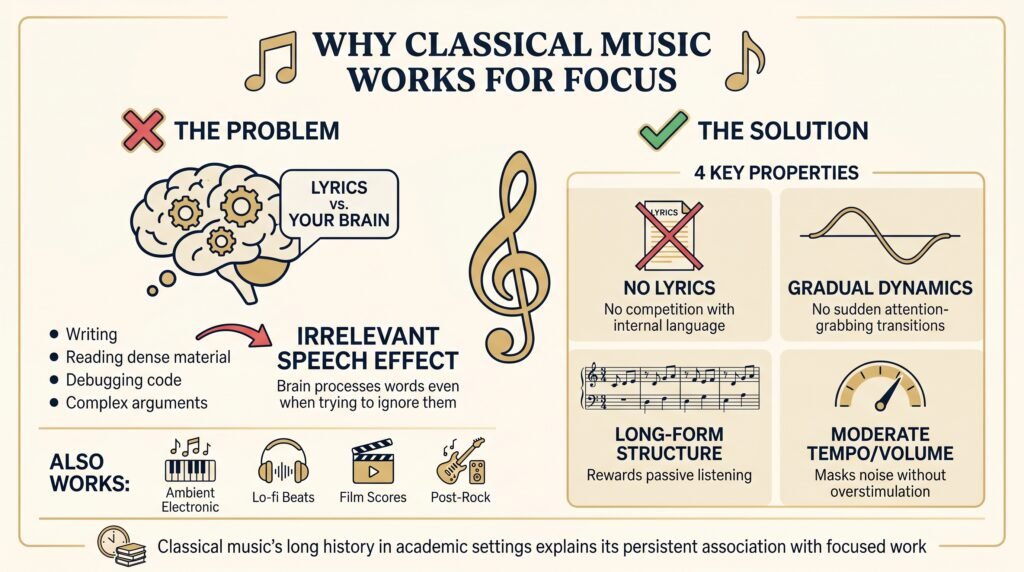
None of this is unique to classical music. Ambient electronic music, lo-fi beats, film scores, and post-rock all share these properties to varying degrees. But classical music has a longer cultural history in academic and professional settings, which probably explains its persistent association with focused intellectual work.
The Openness Connection
One reason the IQ-classical music link persists is that the personality trait most associated with both intellectual curiosity and complex music appreciation is openness to experience. People high in openness tend to:
- Seek out novel and complex stimuli
- Enjoy abstract or ambiguous content
- Have broader aesthetic interests
This means they’re more likely to explore classical music in the first place and to stick with it once they do. But “more likely to explore” is a long way from “naturally drawn to” — and it says nothing about whether they’ll actually use it while working.
Key Points
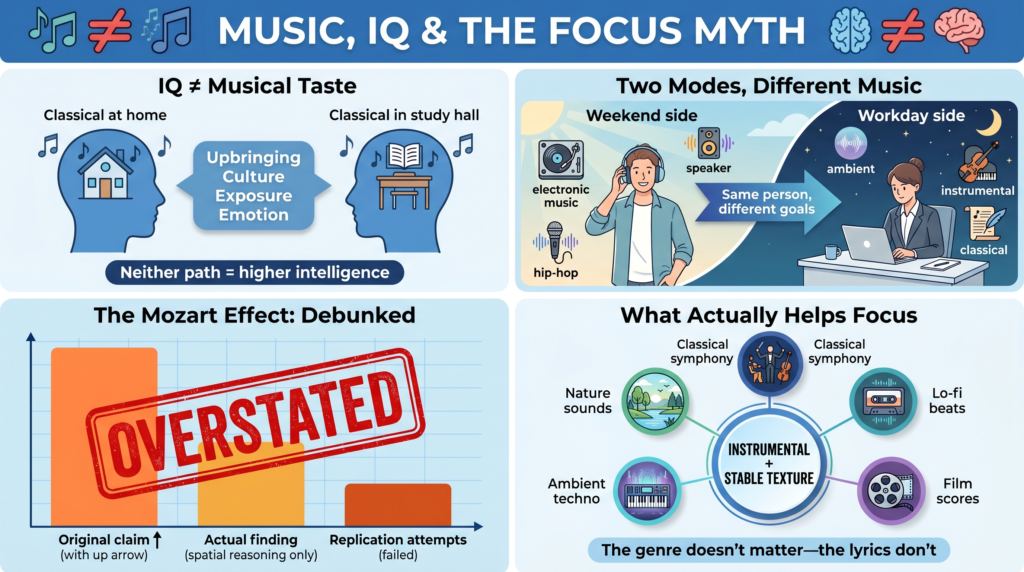
Musical taste is shaped by far more than IQ
When people ask whether do high IQ people like classical music, they’re often assuming intelligence works like a personality type — that it comes with predictable tastes attached. It doesn’t. Upbringing, cultural background, emotional associations, and simple exposure all play large roles. Someone who grew up in a household where classical music was on in the background has a different relationship to it than someone who encountered it for the first time in a study hall. Neither experience is correlated with intelligence.
Focus preferences and recreational preferences are different things
A developer might spend weekends listening to electronic music or hip-hop and switch to ambient or instrumental tracks during deep work sessions. These aren’t contradictions — they reflect different functional goals. Music for mood and music for concentration don’t have to be the same genre.
The “Mozart Effect” was significantly overstated
The original research behind this popular idea focused on a very specific, short-term effect on spatial reasoning tasks—not a general intelligence boost from listening to classical music. That finding was also difficult to replicate, and the broader claim that classical music makes you smarter has no serious scientific backing.
Lyric-free audio is what tends to help — not the genre label
If classical music helps you focus, it’s almost certainly because it’s instrumental and relatively stable in texture — not because of anything intrinsically “intelligent” about it. Lo-fi hip-hop, ambient techno, film scores, and nature sounds work on the same principle for many people.
Examples and Case Studies
Software Developer
A developer working through a complex refactor for several hours might find vocal music too distracting but silence too hollow. Instrumental piano, ambient electronic music, or a structured focus audio platform might fill the gap — the goal is reducing input noise, not enjoying music in any active sense. Whether that ends up being Debussy or Brian Eno depends on personal preference, not IQ.
Graduate Student
Long reading sessions in STEM research tend to require sustained, quiet attention. Many PhD students reach for classical music not because they’ve chosen it as an artistic preference but because it’s familiar, predictable, and doesn’t suddenly demand their attention the way music with lyrics or dramatic builds does. It functions more like white noise with structure.
Freelance Writer
Writers often find that the emotional texture of what they’re listening to bleeds into the work — a cinematic score can help sustain momentum through a long piece, while lo-fi or quiet classical piano keeps the environment stable without creating a mood they didn’t choose. The preference tends to shift depending on the type of writing and the stage of the draft.
Worth trying: Brain.fm and ambient playlist tools like Endel are designed around this kind of adaptive, task-specific listening.
ADHD Adults
This one is genuinely varied. Some adults with ADHD find classical music calming and helpful for settling into work. Others find it too quiet and not stimulating enough— their brains need more input to stay engaged, not less. White noise, binaural beats, or higher-energy instrumental music often works better for this group. There’s no single right answer here, and the “classical music is best for focus” framing can actually be counterproductive if it leads someone to rule out approaches that would actually work for them.
Looking for distraction-free background music? Brain.fm is one of the most popular services for people who want to improve focus while working, studying, or reading. Read our Brain.fm here.
Expert Insights
Psychologists who study personality and music preferences tend to be pretty skeptical of simple mappings between intelligence and taste. Do high IQ people like classical music more than others? The honest answer from researchers is: not in any straightforward way. The relationship is indirect at best — mediated by openness, shaped by exposure, and highly sensitive to context.
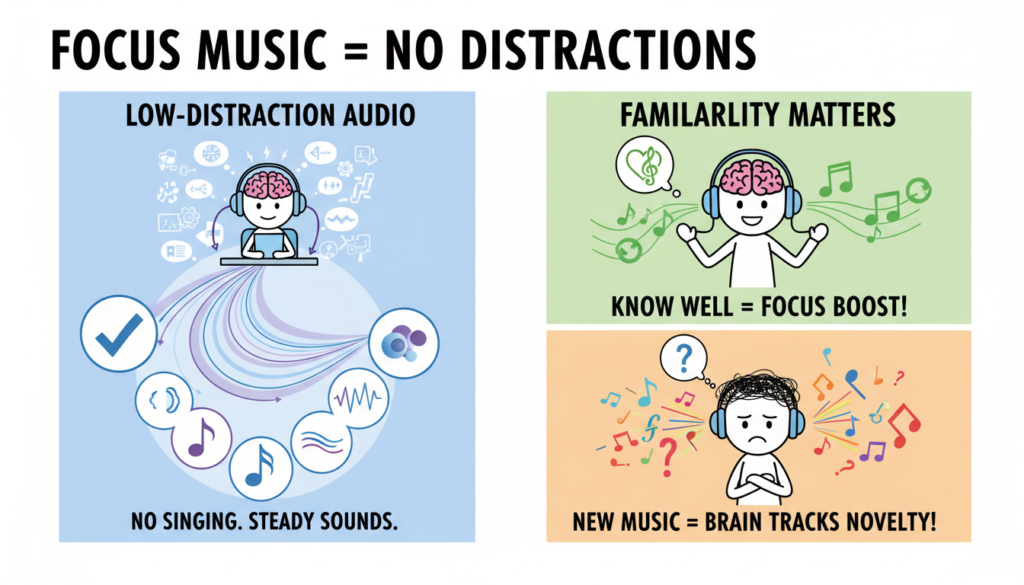
What seems to hold across research is that people engaged in demanding cognitive work tend to prefer lower-distraction audio environments. Whether that means silence, white noise, classical music, or ambient electronic music varies considerably from individual to individual. The common thread is the absence of competing verbal content and unpredictable auditory events — not any particular genre.
There’s also reasonable evidence that personal familiarity matters a lot. Music you know well tends to be less distracting than music you’re hearing for the first time, regardless of genre. A piece of classical music you’ve never heard before might be more distracting during work than a familiar pop song — the brain’s tendency to track novelty doesn’t disappear just because the music is instrumental.
Additional Resources
If you’re trying to find audio that genuinely supports focus rather than just aesthetics, here are some options worth exploring:
Classical music playlists work well for calm, low-distraction work. Good entry points include Baroque in the style of Bach (keyboard works, Handel) and slower Romantic piano pieces. Avoid dramatic orchestral works with a large dynamic range if a consistent background sound is the goal.
Lo-fi hip-hop has become a default study genre for a generation of students, and for reasonable reasons — it’s instrumental, low-tempo, and deliberately repetitive enough not to demand attention.
Ambient and generative music (Brian Eno, Stars of the Lid, Moby’s “Long Ambients” series) sits at the far end of the “background audio” spectrum and works well for people who find even instrumental classical music too interesting to ignore.
White noise and nature sounds are underrated for open-plan offices. They mask unpredictable environmental sounds without adding any musical content that might compete for attention.
Purpose-built focus audio platforms:
- Brain.fm — generates audio specifically designed to support sustained attention, drawing on research into neural entrainment. Worth trying if you’ve found that playlists don’t reliably help.
- Endel — adaptive soundscapes that adjust to your activity, time of day, and environment.
- Noisli — customizable ambient and white noise mixer, useful for ADHD and open-office environments.
Conclusion
So, do high IQ people like classical music? Some do. Many don’t. The link is real but indirect — running through personality traits like openness rather than intelligence directly — and it says very little about any individual person’s preferences.
The more practical takeaway is that classical music tends to work for focused work because it’s instrumental, predictable, and low-distraction. Those properties help most people, not just high scorers on cognitive tests. And those same properties can be found in plenty of other genres that don’t carry the “intellectual” cultural baggage.
The best focus audio is whatever lets you stay in the work without thinking about what you’re listening to. For some people, that’s Bach. For others, it’s brown noise or an ambient playlist. If classical music works for you, that’s a fine tool to use. If it doesn’t, there’s no reason to force it.
Frequently Asked Questions
Does listening to classical music make you smarter? No. The “Mozart Effect” that sparked this idea was a limited finding about short-term spatial reasoning, not general intelligence, and the broader claim isn’t backed by solid research.
Why do students study with classical music? Mostly because it’s instrumental. Music without lyrics tends to interfere less with reading comprehension and writing. Classical music is one option in that category — not the only one.
Is classical music better for focus than lo-fi? It depends entirely on the person and the task. Both are instrumental and low-distraction. Some people find classical music too dynamic or interesting; others find lo-fi too repetitive. Try both.
Do programmers typically listen to classical music? Some do, but many prefer ambient electronic music, lo-fi, or white noise. The common thread is usually “no lyrics” rather than any specific genre.
Is instrumental music generally better for cognitively demanding tasks? For most people, yes — particularly tasks that involve language (reading, writing, problem-solving with verbal reasoning). The brain tends to process speech-like sounds even when you’re trying to ignore them, which creates mild but real interference.
What should I use if classical music doesn’t help me focus? Try ambient music, white noise, or a purpose-built focus audio platform like Brain.fm or Endel. The goal is to find audio that reduces distraction for your specific cognitive style, not to match an aesthetic to an intelligence level.
Some of the links on Best Focus Music are affiliate links. This means that if you click a link and buy something, we may earn a small commission — at no extra cost to you. We only recommend products we genuinely think are worth your time.
We are a participant in the Amazon Associates Program, an affiliate advertising program designed to provide a means for sites to earn advertising fees by linking to Amazon.com and affiliated sites. We may also work with other affiliate networks and individual brands from time to time.