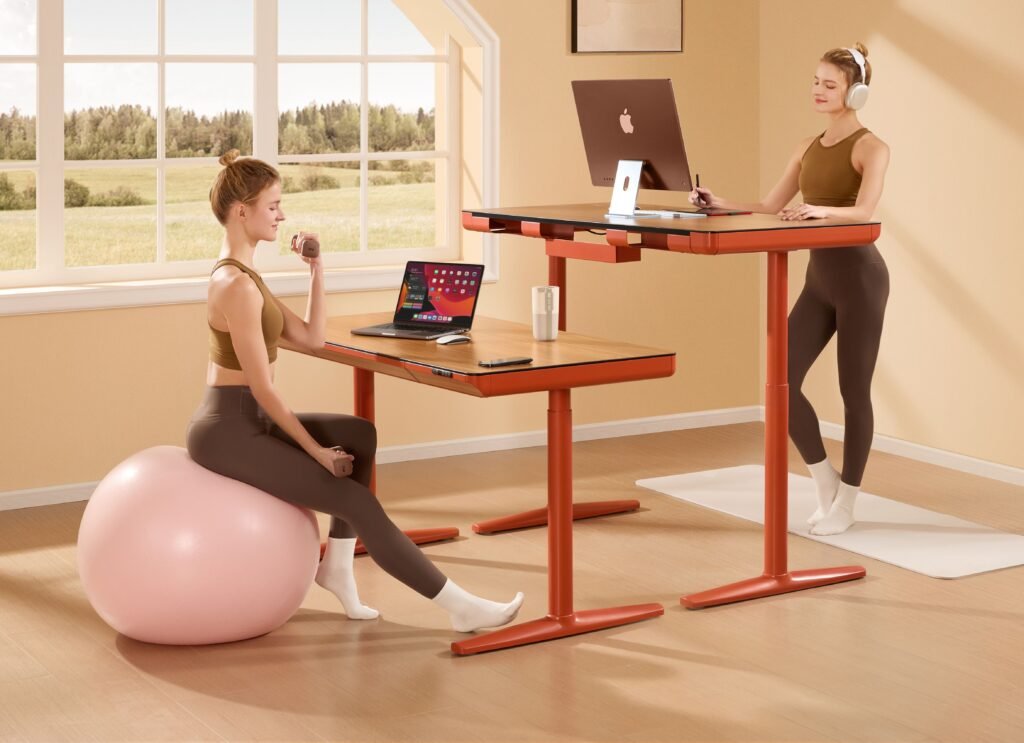
Creating a productive home office can be challenging when you don’t have much room to work with. A large desk might offer plenty of space for monitors, accessories, and paperwork, but it can quickly overwhelm a small bedroom, apartment, or shared workspace.
Fortunately, you don’t necessarily need a full-size desk to enjoy the flexibility of sitting and standing throughout your workday. The best standing desks for small spaces combine a compact footprint with practical height adjustment, enough room for your essential equipment, and a design that fits your home office.
The challenge is finding the right balance. A desk that’s too narrow may leave little room for your keyboard and monitor, while a model that’s too shallow can make positioning your screen more difficult. You also need to consider stability, cable management, and whether the desk can reach a comfortable height for both sitting and standing.
In this guide, we’ll compare five types of compact standing desks and explain what to look for before buying. Whether you’re setting up a small home office, working from a bedroom, or trying to make better use of a corner of your apartment, these options can help you narrow down your choices.
If you’re not sure if a standing desk is for you, you can check out our article Standing Desk Pros and Cons: Is a Standing Desk Worth It?
Quick Comparison: Best Standing Desks for Small Spaces
The following shortlist covers different needs that you can have for a standing desk. Think about specific models, dimensions, and configurations, and verify them before purchase.
| Desk or model to investigate | Best for | Main advantage | What to check? |
|---|---|---|---|
| ErGear 40 x 24-inch Electric Standing Desk | Compact everyday workstation | A relatively narrow full desk | Available configuration and height range |
| HUANUO 32-inch Electric Standing Desk | Very small workspaces | Minimal desktop footprint | Usable surface area and weight capacity |
| Claiks 48 x 24-inch Electric Standing Desk | Small offices needing more room | More space for monitors and accessories | Actual dimensions and stability |
| FlexiSpot E7 in a compact configuration | Buyers prioritizing adjustability | A more premium adjustable-desk option | Compatible desktop sizes and frame dimensions |
| VIVO Standing Desk Converter | Workspaces where floor space is limited | Uses your existing desk | Converter dimensions and available lifting range |
These are product candidates, not a verified ranking based on hands-on testing.
1. ErGear 40 x 24-Inch Electric Standing Desk: A Compact Everyday Workstation
A desk around 40 inches wide and 24 inches deep can be a useful starting point if you need a dedicated sit-stand workstation but cannot accommodate a larger desktop.
The ErGear 40 x 24-inch electric standing desk is worth investigating for this type of setup. Its compact dimensions are intended to fit into smaller spaces while retaining a conventional desktop layout.
For someone using a laptop with an external monitor, this size may offer a reasonable compromise between available workspace and floor space.
Why consider it?
- A narrower desktop can fit more easily against a wall or in a bedroom office.
- Electric adjustment lets you change the desk height without manually lifting the work surface.
- The rectangular layout can accommodate a basic monitor, keyboard, and mouse setup.
- It offers an alternative to placing a converter on top of an existing desk.
What to consider
The ErGear doesn’t give you the same flexibility as a larger workstation. If you use two large monitors, speakers, a microphone, and several accessories, the available surface may feel restrictive.
Check the minimum and maximum height carefully, especially if you plan to use the desk while sitting and standing. Also verify the stated weight capacity and the stability of the particular model.
Best for: Remote workers who need a compact, dedicated desk for a laptop or single-monitor setup.
2. HUANUO 32-Inch Electric Standing Desk: Best for Very Small Spaces
Sometimes even a 40-inch desk is too wide. If you’re working in a small bedroom, dorm room, or apartment, a desk around 32 inches wide may be worth considering.
HUANUO offers compact desk options that are designed for smaller workspaces. Some configurations include storage, which may be useful when there’s no room for a separate drawer unit.
The main advantage of a desk this size is its footprint. It fits in spaces where a standard 48-inch desktop simply isn’t practical.
Why consider it?
- A narrow desktop can suit a very compact home office.
- Some configurations include storage features.
- A dedicated adjustable desk can provide more flexibility than a fixed-height table.
- It may suit people who primarily work from a laptop.
What to consider
At this size, every inch matters. A 32-inch desk may be enough for a laptop and a few essentials, but a full-size monitor and separate keyboard can take up much of the available surface.
Measure the usable desktop area rather than relying on the overall width alone. Check the depth, monitor placement, lifting range, and weight capacity before buying.
If you plan to add a monitor arm, confirm that the desk supports the mounting method you intend to use.
Best for: People with very limited floor space who need a basic adjustable workstation.
3. Claiks 48 x 24-Inch Electric Standing Desk: Best for a Small Office That Needs More Space
Not every small home office requires the narrowest possible desk. If you have enough wall space for a desktop around 48 inches wide, a slightly larger model may be more practical.
Claiks offers electric standing desk models in this general size category. A 48 x 24-inch surface gives you more room to organize your equipment than a 32- or 40-inch desktop.
This can help if you use an external monitor, laptop, keyboard, mouse, and notebook throughout the day.
Why consider it?
- More surface area for a typical home office setup.
- Room to organize frequently used accessories.
- Electric height adjustment on applicable models.
- A practical middle ground between a micro desk and a full-size workstation.
What to consider
A 48-inch desk still needs some room around it. Measure the available wall width and leave space for nearby furniture, doors, and cable routing.
Also think about Depth. A 24-inch desktop may be adequate for many setups, but your monitor stand and other equipment determine how much usable space is available.
Check the exact Claiks model’s height range, weight capacity, stability, and included controls. Product variants can differ, so don’t assume that every listing has identical specifications.
Best for: People who need a more comfortable working surface but want to avoid a large office desk.
4. FlexiSpot E7 in a Compact Configuration: Best for Buyers Prioritizing Adjustability
If you want a more substantial adjustable-desk setup, a compact configuration of the FlexiSpot E7 is another option to investigate.
Rather than choosing a desk solely because it is small, this approach values the adjustment system and overall workstation requirements while keeping the desktop size appropriate for your room.
Depending on the configuration, you may be able to select a desktop that more suitably fits your available space.
Why consider it?
- A potential option for buyers who value the adjustable frame.
- Desktop configurations may provide flexibility when planning a workstation.
- Worth comparing if you want a compact desk without choosing the smallest budget model.
- This may matter for people who expect to use their desk regularly throughout the workday.
What to consider
The E7 is not automatically a small desk in every configuration. The final footprint depends on the desktop and frame you select.
Check the exact width and depth before purchasing. Also confirm the height range, weight capacity, motor configuration, warranty, and the frame’s compatibility with the intended desktop.
A premium frame may not be worth it if your needs are simple and a less expensive compact desk provides enough space and adjustability.
Best for: Buyers who want to focus on the desk’s adjustment system and can verify that the chosen configuration fits their room.
5. VIVO Standing Desk Converter: Best for Saving Floor Space
A complete standing desk isn’t the only way to create a sit-stand workstation.
A standing desk converter sits on top of an existing desk and raises a platform for your monitor, keyboard, or other equipment. VIVO offers converters in different sizes and designs, making this category worth considering if you don’t want to replace your current furniture.
Because a converter uses your existing desk, it doesn’t require additional floor space for a separate desk frame and legs.
If you’re not sure whether to go for a standing desk or a desk converter, you can read our article: Standing Desk vs. Desk Converter: Which Is Better for Your Home Office?
Why consider it?
- Keeps your existing desk in use.
- Avoids replacing a desk that is already suitable.
- Can be useful in rented apartments or shared rooms.
- Offers another route to a sit-stand setup when floor space is limited.
What to consider
A converter still occupies space on your existing desktop. In a very small room, that may leave less room for other work materials.
You also need to consider the combined height of your existing desk and the converter. Some setups may be too high for comfortable seated typing, even when the converter is lowered.
Check the platform dimensions, lifting range, weight capacity, and monitor compatibility before buying.
Best for: People who already have a suitable desk and want to add standing functionality without replacing it.
How to Choose the Best Standing Desk for a Small Home Office
Choosing a compact desk isn’t only about finding the smallest model available. You need enough room to work comfortably, an adjustment range that suits your body. And a design that you like.
We’ll go over a few steps you can take to make choosing a standing desk easier.
1. Measure Your Space
First, measure the width and depth of the area where the desk will stand.
Don’t measure only the wall. Consider nearby cabinets, radiators, doors, and the room you need for your chair.
A compact desk should fit without making it difficult to move around the room. Also check whether cables can reach the power outlet without being stretched when the desktop is raised.
2. Choose the Right Desktop Width
The right width depends on your equipment. For example:
- Around 32 inches: Potentially suitable for a laptop-focused workstation.
- Around 40 inches: Worth considering for a laptop and a single monitor.
- Around 48 inches: Provides more flexibility for a monitor, keyboard, and additional accessories.
These examples are starting points. How much space you need also depends on your monitor dimensions, stands, keyboard placement, and preferred working space.
3. Check the Desktop Depth
Depth matters as much as width.
A desk can fit neatly into a narrow room but still leave insufficient space for your monitor and keyboard. If your screen sits too close, the setup may be uncomfortable.
The solution: measure your equipment and consider whether a monitor arm could free up desktop space or allow the screen to sit farther back.
4. Check the Height Range
A standing desk needs to work for you in both sitting and standing positions.
Check the manufacturer’s minimum and maximum desktop heights. Consider your seated elbow height and standing elbow height rather than relying only on a generic height recommendation.
5. Stability and Weight Capacity
A compact desktop doesn’t automatically mean a stable desk.
Look at the frame design, stated weight capacity, and available information about stability at maximum height.
Include the load of your monitors, laptop, accessories, and anything else that will move with the desktop.
If you use a monitor arm, confirm that the desk supports your intended mounting arrangement.
6. Cable Management
Cable management can make a noticeable difference in a small home office.
Look for features such as a cable tray, routing holes, or space beneath the desktop for power strips. If these features aren’t included, check whether you can add compatible accessories. You can get some extra idea’s from our article Best Desk Accessories for Deep Work, where we go over 10 upgrades for your workspace.
Remember that cables need enough slack to accommodate the desk’s full range of movement. A neat setup at sitting height should remain safe when the desk is raised.
Are Compact Standing Desks Worth It?
A compact standing desk can be a sensible investment if your current workspace is too large, uncomfortable, or difficult to adjust.
The main benefit is flexibility: you can create a sit-stand setup without dedicating an entire room to a large desk.
However, a smaller footprint involves trade-offs. You may have less room for multiple monitors, paperwork, or accessories, and some compact desks have more limited adjustment ranges or weight capacities.
Before purchasing, think about how you actually work. If you use a laptop for most tasks, a small desk may be a good option. If you use two monitors and several peripherals, a wider desktop or a carefully chosen monitor arm may be more practical.
You should also compare the cost of a complete standing desk with a converter for your existing desk.
If you’re still deciding whether a full adjustable desk is the right choice, read our Best Standing Desks for Productivity: 3 Top Picks for 2026 guide to compare complete desks for different needs.
Final Verdict: Which Compact Standing Desk Should You Choose?
The best standing desk for a small home office depends on your available space and the equipment you need to accommodate.
- Choose a 32-inch desk if space is extremely limited and your setup is simple.
- Consider a 40-inch desk if you want a compact dedicated workstation.
- Choose a 48-inch desk if you have enough room and need more desktop space.
- Investigate a premium adjustable frame if its height range and features justify the cost.
- Consider a desk converter if you want to keep your existing desk and not add a separate floor footprint.
Before buying, confirm the exact model dimensions, adjustment range, stability, weight capacity, warranty, and current price.
A compact desk should help you use your space better without forcing you to compromise on the essentials. The right choice is the smallest desk that still fits your equipment and lets you work comfortably in both sitting and standing positions.
For more options, explore our Best Standing Desks for Productivity: 3 Top Picks for 2026 guide.
Affiliate disclosure: As an Amazon Associate, I earn from qualifying purchases. If you buy through qualifying links in this article, I may receive a commission at no additional cost to you.
Some of the links on Best Focus Music are affiliate links. This means that if you click a link and buy something, we may earn a small commission — at no extra cost to you. We only recommend products we genuinely think are worth your time.
We are a participant in the Amazon Associates Program, an affiliate advertising program designed to provide a means for sites to earn advertising fees by linking to Amazon.com and affiliated sites. We may also work with other affiliate networks and individual brands from time to time.